Designing for different devices often means making tough decisions — what to keep, what to simplify, and what to leave out. When I was working on the Calendar page for a project management app, the contrast between the fully-featured web version and the pared-down mobile experience became a perfect example of graceful degradation in design. Instead of forcing every feature into a smaller screen, I started thinking about how the core experience could remain useful, intuitive, and elegant — even as the complexity scaled down.
The starting point

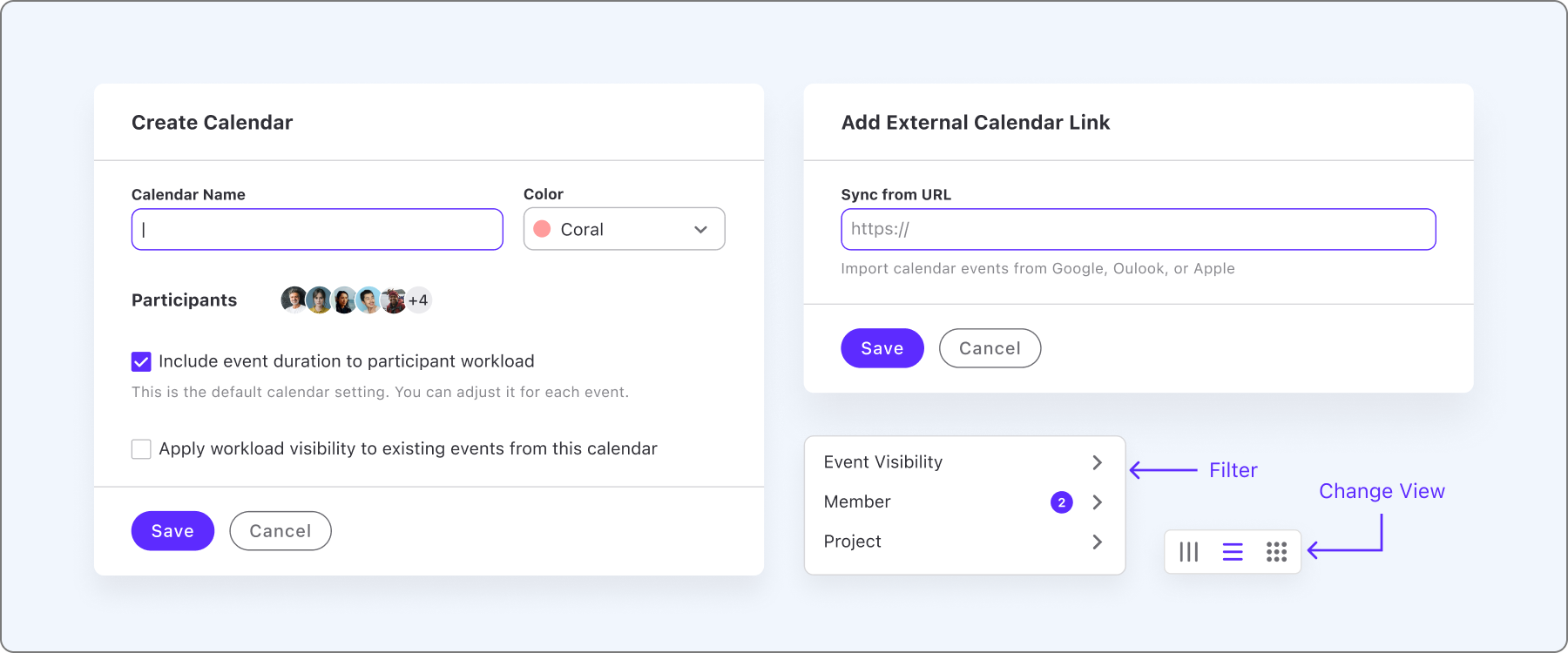
On the web, the Calendar page was designed to be powerful and flexible — serving as a central hub for managing a wide range of planning needs. It supported tasks, subtasks, events, recurring tasks, all-day events, availability records, and reminders. Users could integrate external calendars like Google Calendar, switch between multiple calendar views, and apply filters to control visibility. It was built for depth and control — ideal for users who needed a robust, high-level overview of their project timelines.
Intentional Reduction
On mobile, the Calendar experience was intentionally reduced to its essentials. Instead of replicating the complexity of the web version, we focused on preserving just enough functionality to keep the interface useful and uncluttered.
The design featured a simple month view, where users could tap on a specific date to reveal a focused list of events and availability records for that day. From there, they could add, edit, or delete events — covering the most common, on-the-go interactions without overwhelming the limited screen space. This shift wasn't about losing features, but about respecting the constraints and context of mobile use.

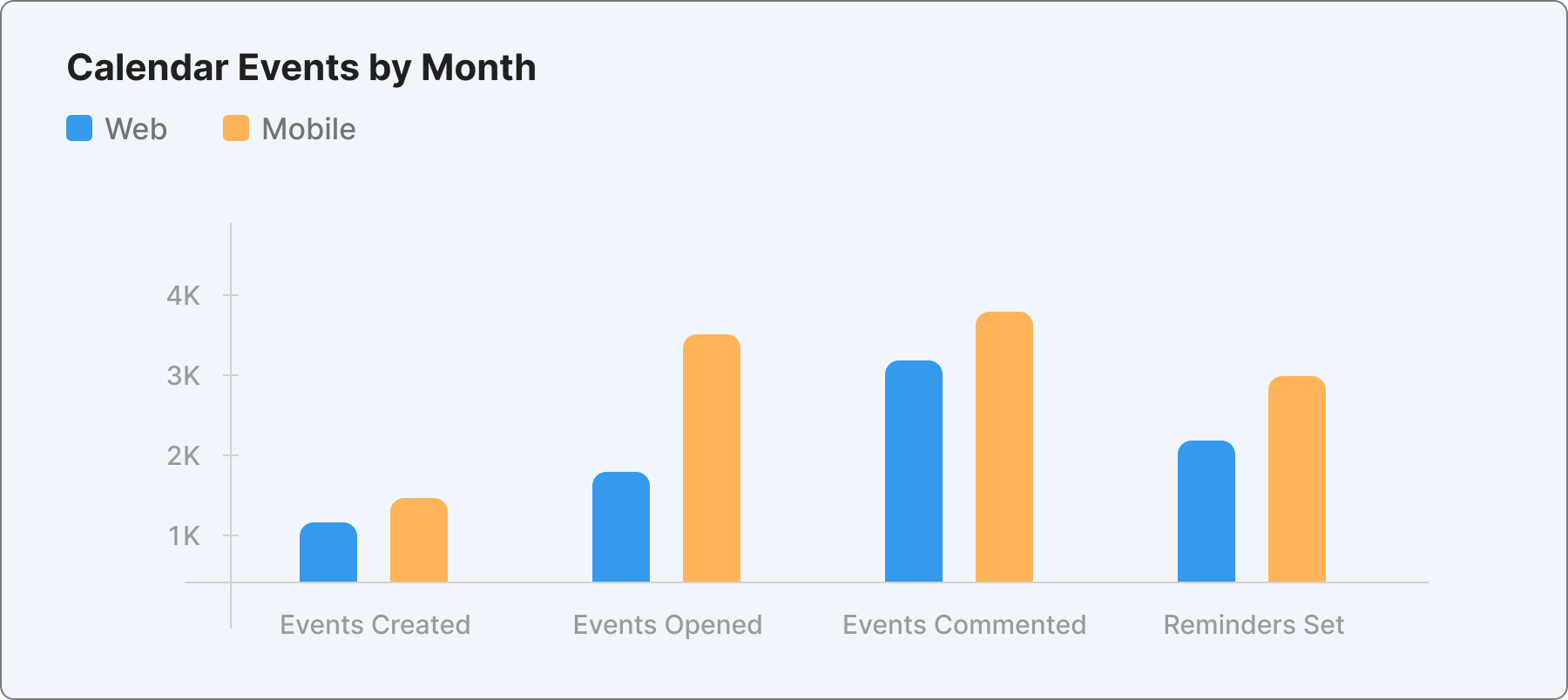
Perhaps the most revealing interaction was the need to quickly open a meeting link from the phone — something simple, yet critical in real-world, on-the-move scenarios. It reinforced the idea that mobile design doesn't need to be a compressed version of the desktop; it needs to be a focused one. Graceful degradation isn't about cutting corners — it's about making intentional trade-offs to support context-specific needs. By identifying the core interactions that matter most in a mobile setting, designers can create experiences that feel natural, purposeful, and just right for the moment.